
When I first moved to Providence years ago, I noticed a community garden that took up at least two city blocks just two miles down the street. There’s quite a bounty behind that little wooden fence—rows and rows of raised garden beds.
I wondered what secret society had privy to this lush piece of property, and how could I get in? After a few years of driving by with the idle thought of inquiring, I finally searched online for community gardens in the city, and there’s a fairly long list. I called the number associated with the garden close by, and to my surprise, I was invited to stop by and choose from vacant plots. There are a few rules: everything that goes into the soil must be organic, no commercial fertilizers or wire supports, and we must be present during spring and fall clean-up days when all gardeners participate in some heavy yard work. In true community spirit, it’s an opportunity for gardeners to meet each other for the first time or to catch up with others not seen in a while. Also there is a well-maintained park-like setting adjacent to the plots—complete with a gazebo and towering trees—for gardeners to enjoy a picnic or simply unwind. Gardening is good, cheap therapy, and this respite full of growth has become my couch.


The gardeners—an eclectic mix of cultural backgrounds—are very helpful and willing to lend a hand, share plants, or their bounty. In one area of the garden, where the larger plots are, I am reminded of my trip to China, where women of small stature, wearing wide round hats, are bent over diligently tending to their gardens.
During the four years that I have been gardening there, many people come and go, but there are few regulars I see every year. The group of small, but sturdy Asian women tend to the bigger plots brimming with plants. An older man, originally from Louisiana and full of southern charm, oversees the gardens offering his tools or help if needed. But over the years, one woman in particular—the garden manager—has become a really good friend. Usually we see each other during the mandatory spring and fall clean-up days, but throughout the year we talk on the phone and catch up with each other. She called me recently to check up on me, saying I was heavy on her mind. Her sincerity and candid nature is genuine. She could be an excellent personal coach, and while that’s not her occupation, her gift of listening and relating combined with her penchant for networking within the community, are invaluable.
Gardening is good, cheap therapy, and this respite full of growth has become my couch.
I start growing seeds in April. This year I used yogurt cups and a $25 sun lamp from amazon. I was impressed at their growth under the lamp as my windows face the north where sunlight is limited.


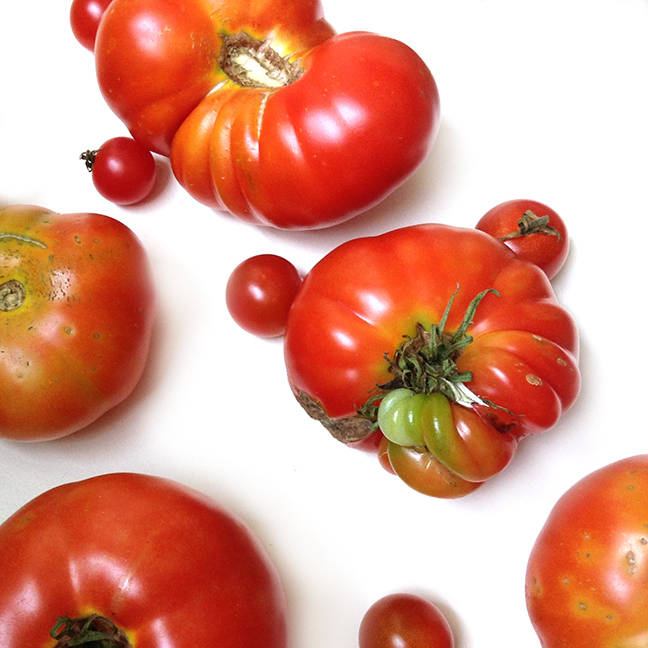
In late May, once the threat of frost is over, I plant the seedlings in the garden. Earlier in the month, a heaping pile of compost gets dumped at one of the garden entrances. The hill of black gold goes down quickly once everyone has shoveled it into their plots. Throughout the growing season, the element of surprise grows each time I approach the plot after a few days of not being there—have the plants gotten any bigger? Are they still alive? Are the heirlooms getting ugly? While I grow sun and heat-loving heirloom tomatoes and basil, many gardeners start earlier in the spring or continue later into the fall with arugula, collards, beets, and other cool-loving plants. There’s a huge bounty for almost three seasons. Some plots are brimming over with various types of lettuces, cabbage, those skinny hot red peppers, and even okra! I’ve noticed chocolate mint and cilantro proliferates from plots into garden paths and into other plots. In spring, I’ll find cilantro that has popped up into mine.


The fall clean-up on a Saturday morning in November is a favorite for me. The turnout is great. The air is just crisp enough to exert ourselves without much of a sweat. As the morning goes by, more and more coats get draped over fences. There is a pile of tools, those paper leaf bags, holey gloves, and various other items needed to clean up the overgrowth, leaves, and debris. One year, a group of students from Brown University helped us out. Another year, a woman was doing a survey with gardeners for her thesis. I enjoy the camaraderie and cooperation by all. This is a community garden.
If you are limited in gardening space, I recommend getting involved in the community garden scene. It’s a great way to do what you love, meet people, and enjoy a break from the computer screen.
 the foodie and the dog